Here’s my list of the books I’m most excited to read in 2010. The first three are not released yet, and are possibly the most highly anticipated fantasy novels slated for (potential) release in 2010. Picks 4-6 are historical fiction, or some twist on the sub-genre. Books 7-9 are continuations, if not necessarily in the same series, of authors I’ve already read at least once. And my final pick is a classic thrown in for good measure.
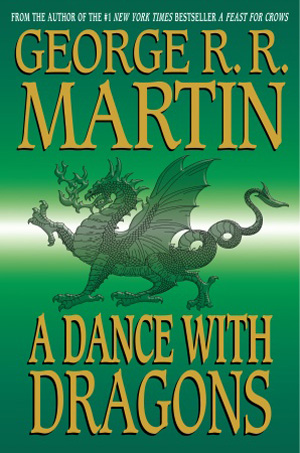
A Dance with Dragons by George R.R. Martin
I know its been five years since A Feast for Crows. But Pat over at Pat’s Fantasy Hotlist has this book slated for release in 2010, and he knows George R.R. Martin personally. Coincidence? Hopefully, for legions of A Song of Ice and Fire Fans, its a bit more.
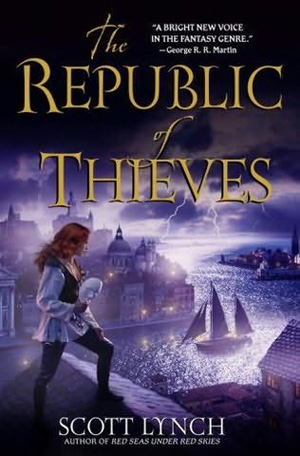
The Republic of Thieves by Scott Lynch
The first two books in Scott Lynch’s fantasy debut series have redefined the meaning of action fantasy. Saying the third book in this seven book series is highly anticipated is like saying Tiger Woods made a boo-boo. In other words, its going to be huge.
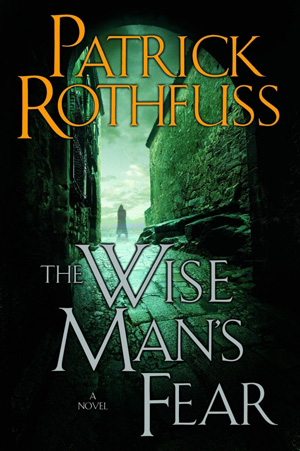
The Wise Man’s Fear by Patrick Rothfuss
Patrick Rothfuss delivered a home run with his first novel, The Name of the Wind, and rightfully earned himself a seat among the top dogs in the fantasy novel industry. We’ll keep our fingers crossed that we’ll see this one drop in 2010.
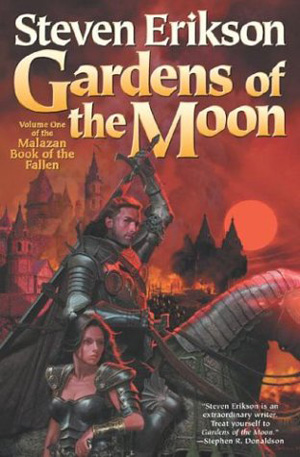
Gardens of the Moon by Steven Erikson
With a degree in anthropology, Steven Erikson’s ability with characterization should be fantastic. Gardens of the Moon is the first book in the ten book Malazan Book of the Fallen series. With historical fiction gaining traction in the industry and the popularity of the later novels in this series recently, I’m interested to get Erikson’s take on fantasy novels.
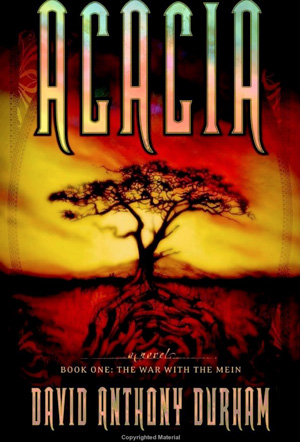
Acacia by David Anthony Durham
Durham has traveled the world, and lived in Scotland for a number of years, before landing in California as a Creative Writing professor at California State University. He’s made a name for himself writing novels involving The American Civil War, Carthage and the war with the Roman Republic. Acacia is his first attempt in the epic fantasy genre, and has made some noise in the industry.
Okay, so I want to make sure we’re clear before diving in: this is not a list of the best fantasy books released in 2009, but rather the top books read and reviewed here at Fantasy Book News in 2009. That said, there are some newer books, and some classics, but overall this is an elite list of fantasy novels that any avid reader should check out. And away we go.
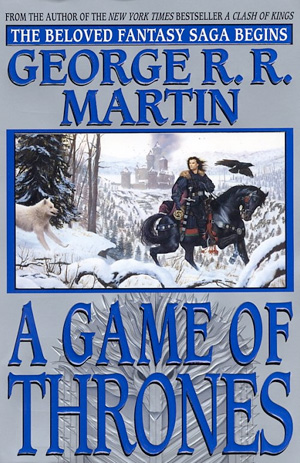
A Game of Thrones by George R.R. Martin
While this series is going on fifteen years, I gave a re-read to the first novel in the Song of Ice and Fire series in 2009, in audio book format. The book still has the same enchanting effect as the first time I read it, and is still the standard to which I compare most other fantasy books, and absolutely any epic fantasy books. Check out the full review of A Game of Thrones.
Red Seas Under Red Skies by Scott Lynch
The second book in Lynch’s seven book Gentlemen Bastards series delivered what many creative people struggle to accomplish time and time again: give the audience a better experience than the original. Red Seas Under Red Skies upped the stakes from The Lies of Locke Lamora, and hit ended up hitting a grand slam. Read the full review of Red Seas Under Red Skies.
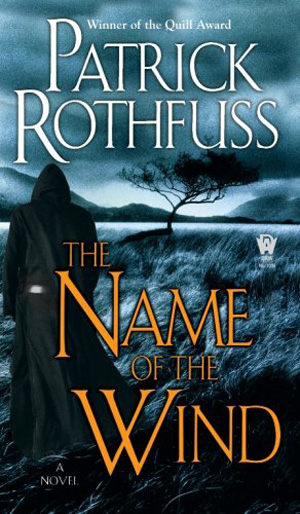
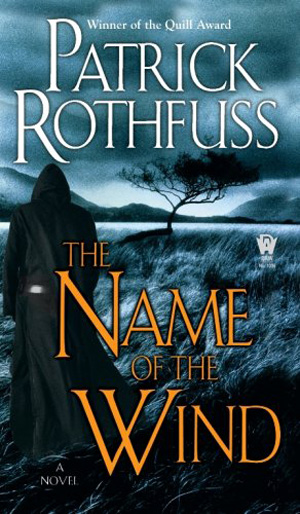
The Name of the Wind by Patrick Rothfuss
This whopping freshman fantasy novel by Rothfuss completely transports you to another world, which is one of the goals that every fantasy novel aspires to. Believe me, I read most of it while lounging poolside in Araxa, Brazil, and I can’t tell you how many times I forgot my beautiful surroundings for the world that Rothfuss creates. Check out the full review of The Name of the Wind.
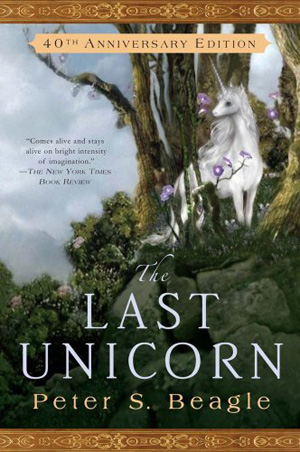
The Last Unicorn by Peter S. Beagle
The quintessential fairy tale, The Last Unicorn is simply a beautiful story. Get lost in a world of fantasy and magic, complimented with a fantastically original plot and a genuine sense of humor. Read the full review of The Last Unicorn.
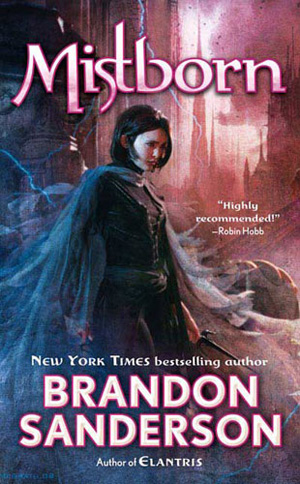
Mistborn by Brandon Sanderson
Mistborn is an absolutely beautiful novel. Its got everything that a fantasy reader looks for: insanely original devices, characters you can identify with, tons of action, and wholesome undercurrents. We have a full review of Mistborn over here.
Everyone is gearing up for the holidays, and this means two things: people are talking about the best books from 2009 (gift ideas!), and people are talking about the most anticipated books form 2010.
We start off with a healthy assortment of reviews, get into a pair of fantastic interviews (check out Rothfuss & Abercrombie – they’re downright hilarious), and top it off with some industry news, recaps of 2009 and outlooks for 2010. I should note that Pat over at Pat’s Fantasy Hotlist seems to be doing everything right this holiday season, hence the need to link to him four times. Great stuff.
We’ve got a very healthy swath of reviews this week, maybe due to the fact that I spent the weekend in Serra do Cipo, so a few of these may reach back to before last weekend. Either way, you can’t lose with reviews of books by Scott Lynch, Ken Scholes, Janny Wurts, Dan Brown and plenty more. A pair of interviews with R.A. Salvatore and Andy Remic are featured, with Remic discussing his most recent novel Kell’s Legend.
Ever want to have your name featured in a fantasy novel? Patrick Rothfuss is giving fans this opportunity. Check out the link below for more details.
The fantasy book world is all a buzz with Joe Abercrombie’s latest novel, Best Served Cold. Abercrombie even grabbed commentary from the great one, George R.R. Martin, which is like giving your book’s marketing campaign a shot of nitrous. Vroom vroom!
Before you read the review of Robin Hobb’s most recent publication, Dragon Keeper, beware: it contains spoilers for the previous nine books. I found out the hard way, and let the author know how I felt in the comments section.
What are your feelings on reviews that give away plot details? Do you prefer reviews with plot summaries, or would you rather have a review detail all the aspects possible about the book without giving away any of the story? Let me know!
Book review of Patrick Rothfuss’s The Name of the Wind
Before cracking open The Name of the Wind and reading one word, I had some pretty high expectations. This is supposed to be the series that eclipses The Lord of the Rings and redefines the genre. Patrick Rothfuss has been hailed as a master of the craft, and this is only his first venture into the genre. Generally, with hype of this magnitude, I’m almost unavoidably let down with the presentation. Kvothe has some pretty big shoes to fill.
This novel is of the epic high fantasy genre, and while its scope is rather grand, weighing in at 722 pages and set to span 3 books, the book is presented as a first-person narrative. If you’re not accustomed to this perspective of storytelling, you may want to be wary. However, how Rothfuss accomplishes this is creatively done to say the least.
The book is presented in a completely linear fashion. If you’re used to the constantly shifting perspective of a George R.R. Martin tale, the flashback-style of The Lies of Locke Lamora, or even the triple plot split of The Lord of the Rings series, you won’t find any of it here. The fact that Rothfuss could write a novel of this size, mainly from the perspective of one character, make it linear, and keep it as interesting as he does is a feat in itself.
And keep it interesting Mr. Rothfuss does. The pace is rather quick for a novel of this size. While Rothfuss is able to keep the pages turning, he writes in a extremely detailed and descriptive fashion. The settings are lavish, from the countryside to the city scenes to the University where the main charatcter Kvothe eventually finds himself. Where Rothfuss really shines is with his descriptive powers surrounding characterization. The details radiate in a circle out from Kvothe. I found his parents to be extremely well-developed, as well as his love interest and professors at the university. Even the bad guys get some fine treatment:
The voice came from a man who sat apart from the rest, wrapped in shadow at the edge of the fire. Though the sky was still bright with sunset and nothing stood between the fire and where he sat, shadow pooled around him like thick oil. The fire snapped and danced, lively and warm, tinged with blue, but no flicker of its light came close to him. The shadow gathered thicker around his head. I could catch a glimpse of a deep cowl like some priests wear, but underneath the shadows were so deep it was like looking down a well at midnight.
While the characterization is extremely well done, it is a bit concerning that the best descriptions seem to come with the characters that Patrick has probably dealt with in his own life. Parents, your first love, teachers; these are all individuals that all of us have intimate experiences with and could probably do a decent job of transferring into a work of fiction. It will be interesting to see how Mr. Rothfuss fares when taking his work in a different direction, by stepping into the minds of other characters, or dealing with characters that are not as easily identifiable to the average person. This aside, the characterization accomplished in The Name of the Wind is a job well done.
The dialog is average, without too many stand out or memorable passages. Like any great novel or work in any genre, The Name of the Wind is chock full of ideas and commentary that holds true in life. This is possibly the most important part of fiction novels to me, as I feel that when I get to the end of a novel not only did I have a fun time getting there, but I’ve also got something to take with me and use later on in life. Here are a few samples:
“Did you learn the whole language?”
“No. Of course not,” Kvothe said rather testily. “Only a portion of it. A large portion to be sure, but I don’t think you can ever learn all of anything, let alone a language.”
Toward the end of the summer I accidentally overheard a conversation that shook me out of my state of blissful ignorance. When we are children we seldom think of the future. This innocence leaves us free to enjoy ourselves as few adults can. The day we fret about the future is the day we leave our childhood behind.
Once I knew what the problem was, it was just a problem, nothing to fear.
And my favorite:
My parents danced together, her head on his chest. Both had their eyes closed. They seemed so perfectly content. If you can find someone like that, someone who you can hold and close your eyes to the world with, then you’re lucky. Even if it only lasts for a minute a day. The image of them gently swaying to the music is how I picture love in my mind even after all these years.
The novel also places a heavy value on music: how it gets into a person’s blood and can consume them; the details of the life of the musician on the road; all the aspects of the first performance. I won’t spoil any of these moments here, but it can be comical in its truth at times:
A poet is a musician who can’t sing. Words have to find a man’s mind before they can touch his heart, and some men’s minds are woefully small targets. Music touches their hearts directly no matter how small or stubborn the mind of the man who listens.
Overall, I believe Patrick Rothfuss’ The Name of the Wind completely lives up to the hype, and takes it a step further by connecting personally with me on a musical and emotional level. I found myself reflecting after closing its pages on how I wish I had got my hands on it as a teenager, prior to attending college. I think this book would have totally changed my outlook, and I would have treated the overall experience of schooling and knowledge with more respect and reverence. It was interesting transitioning from reading The Sword in the Stone, which is a novel about a single relationship between teacher and student, to The Name of the Wind which details one student’s extreme passion and desire for knowledge. That I’ll be returning for the next installation goes without saying. I can’t wait to see what happens when Kvothe’s past catches up with him.


 Fantasy Book News
You must be logged in to post a comment.