Whew! Seems like there’s a lot of people reading Brandon Sanderson and reviewing his work these days. I wonder if taking over the Wheel of Time series for Robert Jordan has anything to do with this popularity.
In my last review of Ship of Magic, I mentioned how I was going to take a departure from the more grown-up world of fantasy for a quick stop on the young adult shelf. The Last Unicorn, while a shorter novel, is not what I could classify as a light read. This is a fairy tale, but a satire about fairy tales, with strong undercurrents of truth strewn throughout. I had considered picking it up in the past, but was discouraged by the fact that there was a unicorn on the cover. Never, and I mean never, judge a book by its cover. It make take some a while to become comfortable with what others may judge of reading such a novel. All I have to say to that is, get over it. This book is fantastic, beautiful, magical, and hilarious. If you’re not into that type of stuff, then I’d recommend you go elsewhere. If you’re into completely absorbing fantasy, and are in for a change of pace from the hulking epic fantasies that are commonplace these days, then I invite you to read The Last Unicorn.
Being a fairy tale, the novel takes place in a few fantastic settings. The landscape can seem to stretch and contract as Beagle moves from one scene to the next, but it is the locations and characters that truly anchor this novel to reality, which is a tough thing to do when you have a cat that can blink into existence out of a fold in the air. In this sense, the novel shows some similarity with Alice in Wonderland. The irony comes in when the characters themselves acknowledge that they are in a fairy tale, speaking of what heroes and magicians are or should be, and how happy endings should actually end. All of this is accomplished masterfully, with real meaning hiding just under the surface. I can perhaps best illustrate with example:
“Robin Hood is a myth,” Captain Cully said nervously, “a classic example of the heroic folk figures synthesized out of need. John Henry is another. Men have to have heroes, and so a legend grows around a grain of truth, like a pearl. Not that it isn’t a remarkable trick, of course.”
Captain Cully, leader of the band of merry men that is undoubtedly a parody of Robin Hood and his merry men, speaking plainly of the mythology of Robin Hood, but delivered with a clear insight into the fact that we as a society like to have people to look up to and uphold as idols. Brilliant! The Last Unicorn is full of wonderful moments like this.
The characters in this novel are classic. From Prince Lir, a character based on Irish mythology, to Schmendrick, a bumbling magician who always seems to have the words to his spells on the tip of his tongue, these characters feel right. They all have their place in the novel, and while not overly developed, they all serve their own purpose perfectly.
Peter S. Beagle uses so many classic examples of fairy tale plots, I don’t believe it possible to detail them all here. What is worth mentioning, is how they are spun uniquely into a new yarn, woven with precision and intent, with the final product bearing signs of originality you wouldn’t have previously believed possible.
The pace is quick. The chapters are light, and I would definitely recommend this book for a younger audience, although it is just as enjoyable at an adult reading level, even refreshing in a sense.
The Last Unicorn is, in a word, delightful. If you have yet to read this classic fantasy fairy tale, I would highly recommend you give it a shot. You may be in for a few surprises.
The books from the number one and two positions remain (The Time Traveler’s Wife, and Assassin’s Apprentice), with The Briar King, The Brass Bed, and Queen of the Orcs: King’s Property all making first appearances in the Amazon top five.
With the Best Served Cold wave subsiding, we’ve got a variety of news in the fantasy blogosphere this week, stretching all the way to the world of graphic novels.
The Time Traveler’s Wife catapults into first from fifth last week. Robin Hobb’s Assassin’s Apprentice stays strong in the number two slot, and the rest of the top five are the same batch, just rearranged slightly.
Its interesting that Margaret Lindholm’s first novel published under the pen name Robin Hobb, from 1995, is maintaining such a strong showing in Amazon’s top five. No doubt caused by popularity of recent books, readers are feeling compelled to go back to the start of the 9 books preceding the forthcoming The Dragon Keeper. I chose to start with the middle trilogy, since I’ve heard its the strongest of the three trilogies. Have you read any other books by Robin Hobb? Leave a comment, it doesn’t require signing up.
The fantasy book world is all a buzz with Joe Abercrombie’s latest novel, Best Served Cold. Abercrombie even grabbed commentary from the great one, George R.R. Martin, which is like giving your book’s marketing campaign a shot of nitrous. Vroom vroom!
Before you read the review of Robin Hobb’s most recent publication, Dragon Keeper, beware: it contains spoilers for the previous nine books. I found out the hard way, and let the author know how I felt in the comments section.
What are your feelings on reviews that give away plot details? Do you prefer reviews with plot summaries, or would you rather have a review detail all the aspects possible about the book without giving away any of the story? Let me know!
Ship of Magic made my list originally as a recommendation by George R.R. Martin on his “Not a Blog” where he listed a bunch of authors to enjoy while awaiting the release of the fifth novel in the Song of Ice & Fire series, A Dance with Dragons. We’re still waiting, and I’m still reading recommended books off his list. I’m glad to say, that with Ship of Magic by Robin Hobb, I’ve been turned on to a fantastic author I had not previously read. My initial impression was, like I’m sure a lot of first impressions about Ship of Magic are, that the author would have to pull off something really special in order for me to believe a book about talking ships. Ship of Magic offers a completely unique and original idea (something pretty hard to come by in fantasy fiction these days), and delivers it in a way that is not only believable, but really cuts straight to the deeper topic of relationships.
These characters are believable. Tough for some authors to accomplish with humans, Hobb takes typically inanimate objects and breaths life into them. Life that is similar in some ways to human, but is intricate in its subtle differences. The variety of characters is enjoyable, and Hobb takes the perspective of the few main characters (including non-humans), as well as some of the secondary characters, which creates an enjoyable blend of viewpoints. Not as vast as some of George R.R. Martin’s works, where he can go for entire novels skipping characters, Hobb’s cast of characters is a wonderful balance. Some of my favorite insights came from the character Wintrow, a teenage Priest of Sa in training, and his teacher’s lessons:
“Wintrow,” he chided softly. “Refuse the anxiety. When you borrow trouble against what might be, you neglect the moment you have now to enjoy. The man who worries about what will next be happening to him loses this moment in dread of the next, and poisons the next with pre-judgement.”
Or his conversations with Vivacia, the Vestrit family liveship:
“This is blasphemy,” Wintrow said fervently.
“Is it? Then how do you explain it? All the ugliness and viciousness that is the province of humanity, whence comes it?”
“Not from Sa. From ignorance of Sa. From separation from Sa. Time and again I have seen children brought to the monastery, boys and girls with not hint as to why they are there. Angry and afraid, many of them, at being sent forth from their homes at such a tender age. Within weeks, they blossom, they open to Sa’s light and glory. In every single child, there is at least a spark of it. Not all stay; some are sent home, not all are suited to a life of service. But all of them are suited to being creations of light and thought and love. All of them.”
“Mm,” the ship mused. “Wintrow, it is good to hear you speak as yourself again.”
Hobb does a fantastic job of moving the point of view from a young, frivolous, barely thirteen year old girl, to her grandmother, the matriarch of the family. There is a healthy cast of pirates, and a few quintessential pirate novel plot points that I won’t get into in this review.
Moving from one character to the next gives the novel a dextrous pace, with the reader never feeling the need to progress the story at either a slower or quicker speed. The book mainly takes place in port towns, or on the open sea. The characters range from once-wealthy families who own liveships, to a great mixture of pirates and sea serpents, to a mysterious society of folk who live up the Rain Wild river. Hobb has actually focused on this society of people for her most recent series, The Rain Wild Chronicles, the first novel of which, Dragon Keeper, was recently released in the UK, and is slated for release in the US in January 2010. I’d recommend starting with the Liveship Traders books, and working your way to toward the new series.
Ship of Magic is definitely an adult novel, with multiple adult-oriented themes running through it, so reader beware. I’m going to take a break from this genre with my next read, The Last Unicorn by Peter S. Beagle.
To be able to take an idea as far fetched as living ships (and other wooden objects) and pull it off as well as Hobb does truly is a testament to her talent for writing creative fantasy literature. The flair with which she builds the characters and world around this central idea in Ship of Magic is the cement in a foundation of an expanding mansion epic fantasy novels. I would highly recommend Ship of Magic as a starting point to Hobb’s world of fantasy books.
 by Audrey Niffenegger
 by Greg Keyes
 by Jennifer Stevenson
 by Charlaine Harris
 by Robin Hobb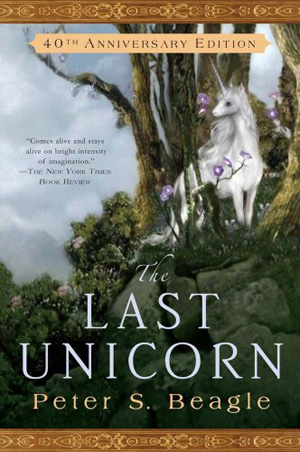

 by Morgan Howell
 by Stephenie Meyer
 by Naomi Novik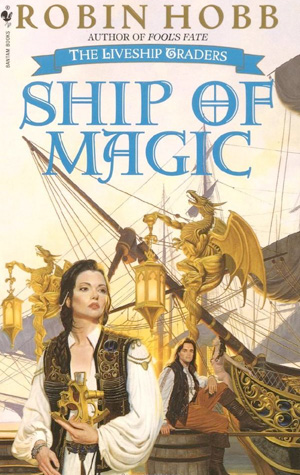

 , was recently released in the UK, and is slated for release in the US in January 2010. I’d recommend starting with the Liveship Traders books, and working your way to toward the new series.
 Fantasy Book News