Top 10 Fantasy Video Games of All Time

Fantasy RPG video games have come a long way over the past 30 years, so I wanted to take a look at historically how we got from the text-based games of 1980 to the fully immersive online worlds where we play today in 2011. If you’re like me and you’re into fantasy books, you’ve likely played RPG video games, and maybe even played some old school role playing games as well. These video games combine the best of fantasy literature and role playing games, and are in chronological order starting in 1980 through 2011, not in order of goodness, or any other sort method.

This is the fourth in a series of Top 10 posts covering the fantasy industry. Last week, we covered the Top 10 Fantasy Books for 2011. Next week, we cover the Top 10 eReader Features.

Zork I (1980)
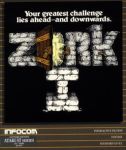
Yes, this is a list of the top 10 RPG video games of all time. Yes, Zork I was a text-only interface. That means no graphics, kiddies. Before the mocking commences, remember this was 1980. Remember that Zork I sold over 400,000 copies. I had to include Zork here out of respect. Not only this, but playing a text-only game accomplishes something that many games today lack: imagination. With a text-only game, the player is left to imagine the gaps, and the human imagination is the most powerful generator of ideas on the planet.  There was real problem-solving mental power involved in playing Zork I. Also, the literal definition of a role-playing game is one in which you imagine what your character is doing, and imagine the world they play in. In this regard, text-based RPG video games may be the best translation of pen-and-paper RPGs to the digital realm, and still remain at the top of this category after 30 years. My hat is off to Zork I, one of the founding fathers of the RPG video game genre.

Dragon Warrior (1986)
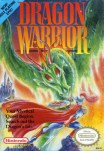
I spent countless hours of my childhood romping through the Dragon Warrior world on my NES. Dragon Warrior was the first RPG to be presented to console (non-PC) based players, and as such is the flagship title for the genre on consoles. Dragon Warrior offers a turn-based battle system, introducing a pen-and-paper style (ala D&D) battle system to millions of console gamers who had potentially never experienced such a game. Dragon Warrior also offered a simple inventory and item management system, again reminiscent of table top gaming. I recently found a Java emulation of the game online, and played through the first few areas, and was amazed by the simplicity of such classic games. Many newer games offer too many options, and playing Dragon Warrior for a few moments has me yearning for a more recent RPG that can offer such a simple experience.  Unfortunately, I think I’m out of luck, and I’m also disappointed that I can’t get the original Dragon Warrior on my Wii console. Boo Nintendo. But alas, Dragon Warrior stands in my memory as one of the most satisfying RPG video games of my life.

The Legend of Zelda (1986)
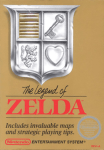
While I spent more time playing Zelda II as a child, the original Zelda game that spawned what has become a modern icon for fantasy video games had to make the list. Zelda, and its main character Link are perhaps the most recognizable game/character combo in fantasy video games in the world. It has garnered the top position for the best video game series ever by GameFAQ, with over 20 titles in the series. I mean, Robin Williams named one of his kids Zelda. The Legend of Zelda was the first console game to feature an internal battery for saving your game — meaning the player could take the cartridge to a friend’s house, stick it in said friend’s NES, and continue gameplay to the dismay of friends and family who were forced to watch. If you doubt Zelda’s true pimp hand, just check out this image on WikiPedia.

Dungeon Master (1987)
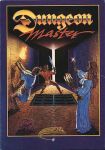
Dungeon Master is the first 3D realtime RPG video game. ‘Nuff said. Ok, maybe not. But it is notable, being the first title that mixed traditional RPG elements like leveling, mana, weapons inventory and character party management with a non-turn-based combat system. I remember moments of sheer terror playing this game, when you actually hear a monster screeching somewhere in the distance, but don’t know what or where it came from. Even more terrifying was looking through your inventory when all of a sudden you get whacked in the face by a mummy. Dungeon Master is a testament to the fact that the realistic graphics of modern games don’t necessarily make a good game. While the graphics were fantastic for its time, looking back now they look extremely simplistic, but the gameplay doesn’t suffer for them one ounce. Dungeon Master was a truly engrossing RPG for the Atari ST (it actually reached more than 50% market penetration of all ST’s ever sold), and a truly satisfying solo RPG game to play. Apparently I’m not the only one who thinks so.

Final Fantasy I (1987)
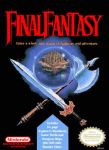
Final Fantasy is one of the most successful video game franchises in history, RPG or not, having sold more than 97 million units in all. What better way to honor the series, than to include the flagship title for the game in our list. Final Fantasy for NES was released in 1987, and expanded on Dragon Warrior style play, in that it retained the turn-based battle system, but players were now responsible for managing a party of four characters rather than the one character in Dragon Warrior. Final Fantasy also added a magic casting system, which was lacking in Dragon Warrior. For lovers of fantasy series, the Final Fantasy main series contains 14 titles, countless sequels, prequels and spin-off games, two feature-length films, tv series, novels, manga comics and soundtracks. In the words of Paris Hilton, “that’s huge”.

Categories: Top 10 | Tags: , , , , , , , , , | 10 Comments

Fantasy Blogosphere: January 17, 2011

Reviews from a wide variety of fantasy literature this week; everything from Joe Abercrombie to Paolo Bacigalupi and more. Top-notch interviews from Ian McKellen, Joe Abercrombie, Patrick Rothfuss and Lev Grossman, and last but certainly not least, HBO announces the Game of Thrones premier date as April 17. Let the countdown begin!

The Lost Gate Book Trailer

Categories: Fantasy Blogosphere, News | Tags: , , , , , , , , , , , , , , , , , , , , | Leave a comment

Amazon’s Top 5 Fantasy Books, January 16, 2011

Fire Burn and Cauldron Bubble and A Game of Thrones hold the first and second slots, respectively, and a few authors that spent time in the top 5 in 2010 make a return in J.R. Rain and Karen Marie Moning.

  1. Fire Burn and Cauldron Bubble, a Paranormal Romance (Kindle) by H.P. Mallory
  2. A Game of Thrones (Kindle) by George R.R. Martin
  3. Moon Dance (Kindle) by J.R. Rain
  4. Toil and Trouble, a Paranormal Romance (Kindle) by H.P. Mallory
  5. Shadowfever (Hardcover) by Karen Marie Moning
Categories: Bestsellers, News | Tags: , , , , , , , , , | Leave a comment

Review: The Dragonbone Chair by Tad Williams

Book review of Tad William’s The Dragonbone Chair

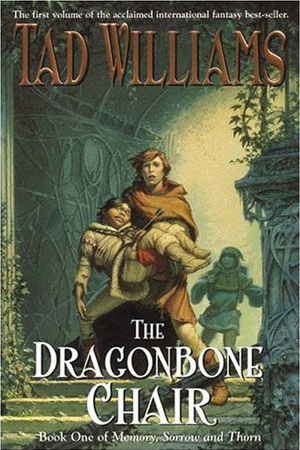
Tad William's The Dragonbone ChairTad Williams is one of the big names in the fantasy genre that previously, I’d had no exposure to. I have always heard good things about his works, and so had fairly high expectations for the first novel in the Memory, Sorrow and Thorn series, The Dragonbone Chair. Lucky for me, Mr. Williams didn’t fail to delight.

Toward the end of this book, which only took me about a week for a novel of about 250,000 words, I read a few comments on the Shannara forum stating that the start of The Dragonbone Chair was a little slow. For me, this wasn’t true at all. I was finishing this book before I knew it. The pacing was perfect, starting out with a healthy dose of background for the main character, Simon, dabbled with action sequences, and steadily progressing to a fantastic finale. I think maybe some readers associate action with pacing, which just isn’t the case. An action sequence, if written poorly, can slow down and ruin the pace of a novel much more than a well written scene where characters are talking over tea. William’s ability to communicate a compelling story in a non-action fashion is not only brilliant, its what makes The Dragonbone Chair such a well-rounded novel. Here’s a perfect example of William’s ability at quality, engaging description:

Beyond the castle chapel the sea of roofs spread out in all directions: the Great Hall, the throne room, the archives and servant’s quarters, all pitched and uneven, repaired or replaced many times as the seasons in their passing licked at gray stone and lead shingle, then nibbled them away. To Simon’s left loomed the slender white arrogance of Green Angel Tower; farther back, protruding above the arch of the chapel tome, the gray, squat bulk of Hjelden’s Tower sat up like a begging dog.

Reading The Dragonbone Chair now shines a light on where it sits in the sequence of epic fantasy over the past century. It contains the classic epic quest elements, as seen in The Lord of the Rings and Shannara books, which were written prior. It also contains many elements that I recognized from novels that came after it, placing The Dragonbone Chair on a pedestal as an influencer of all modern epic fantasy. For example, the distributed kingdom, with each area having their own king, as well as the seasonal change of winter arriving in the summer months, both harken of George R.R. Martin’s A Game of Thrones. Martin upped the ante a bit, but the framework is contained here in The Dragonbone Chair, which was written around eight years prior.

Characterization in The Dragonbone Chair is unmatched. This is a large cast of top-notch characters, all displaying gritty attitudes and facing real problems, as we’ve seen more recently in A Game of Thrones, The Blade Itself, etc. From Rachel, the head maid of Hayholt castle, to Isgrimnur, a hulking Rimmersman from the North, these are characters you become involved with, understand, and learn to either root for or hate.

Amidst the great quest, the coming of a great evil, and the wicked deeds of a mad king, Tad Williams manages to work in a few other classic moments, ranging from comedy:

“Ah. A small aversion to menial labor?” The doctor cocked an eyebrow. “Understandable but misplaced. One should treasure those humdrum tasks that keep the body occupied but leave the mind and heart unfettered. Well, we shall strive to help you through your first day in service. I have thought of a wonderful arrangement.” He did a funny little jig step. “I talk, you work. Good, eh?”

to a little back-patting of his own art form:

Morgenes leaned forward, waggling the leather-bound volume under Simon’s nose. “A piece of writing is a trap,” he said cheerily, “and the best kind. A book, you see, is the only kind of trap that keeps its captive-which is knowledge-alive forever. The more books you have,” the doctor waved an all-encompassing hand around the room, “the more traps, then the better chance of capturing some particular, elusive, shining beast-one that might otherwise die unseen.” Morgenes finished with a grand flourish, dropping the book back up on the pile with a loud thump.

The Dragonbone Chair is the real deal. I’ve picked up many books recently that advertise themselves as the real deal, only to be disheartened upon diving in and finding mediocre writing at best. If you want to find a truly original work of epic fiction, that pulls from the greats before it, and influences all that comes after it, I recommend starting with The Dragonbone Chair, and not stopping until you’ve completed the four book series that is Memory, Sorrow and Thorn. I know I’m on board for the duration.

You can purchase The Dragonbone Chair over at Amazon.com.

Fantasy Book News Ratings

  • Overall: 9 out of 10
  • Plot Originality
  • Setting Development
  • Characterization
  • Dialog
  • Pace

Fan Ratings

Categories: Memory Sorrow and Thorn, Reviews, Tad Williams | Tags: , , , , , , | 4 Comments

Top 10 Fantasy Books for 2011

As I did last year, I’ve compiled a list of what are perhaps the most highly anticipated fantasy novels for 2011. The first three are actually carried over from last year, as they failed to be released in 2010, which arguably leads them to only be more highly anticipated.

This is the third in a series of Top 10 posts covering the fantasy industry. Last week, we covered the Top 10 Fantasy Book Trends of 2010. Next week, we cover the Top 10 Fantasy Video Games of all time.

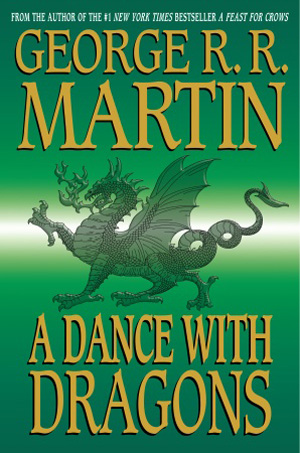
A Dance with Dragons by George R.R. Martin

While fans are frustrated with the time between the previous novel in the Song of Ice and Fire series and A Dance with Dragons, 2011 would be a fantastic time for Martin to release the latest novel in the series, with HBO launching the Game of Thrones television series in 2011. Rumor has it Martin will be announcing something in the coming weeks. Pick up A Dance with Dragons over at Amazon.com.

A Dance with Dragons

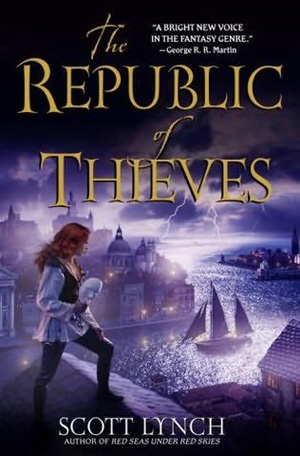
The Republic of Thieves by Scott Lynch

The Republic of Thieves has a tentative release date of Spring 2011, likely due to Lynch‘s bout with depression, which he’s discussed publicly. Here’s to hoping Lynch is hanging in there, as fans of Locke Lamora and crew are salivating for the next installment in this series. Pick up The Republic of Thieves over at Amazon.com, which recently announced the release date as February.

The Republic of Thieves

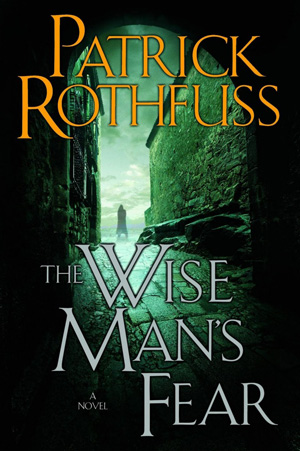
The Wise Man’s Fear by Patrick Rothfuss

Set for release on March 1, 2011 (according to Amazon.com), the second novel in Rothfuss‘ trilogy is likely to be one of the top-selling fantasy novels of 2011. Fans of Kvothe are extremely excited to see where Rothfuss takes the flame-haired hero next. Pick up The Wise Man’s Fear over at Amazon.com.

The Wise Man's Fear

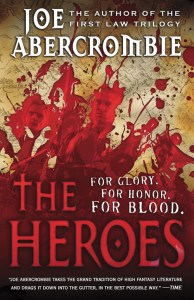
The Heroes by Joe Abercrombie

Joe Abercrombie is hands-down one of the best in the business at this point, and The Heroes is the second stand-alone novel following his First Law trilogy.  I’ve only read the first novel in the First Law trilogy, but I can’t wait to play catch-up and get to his more recent work. Pick up The Heroes over at Amazon.com.

The Heroes by Joe Abercrombie

Requiem by Ken Scholes

Requiem is the fourth book in the Psalms of Isaak quintet. I’ve read Lamentation, the first in the series, and have read reviews of the second and third novels in the series. If Requiem continues the reported increase in quality, The Psalms of Isaak is shaping up to be one of the highest quality fantasy series of the current generation of writers.

[Book cover not yet released]

Categories: Top 10 | Tags: , , , , , , , , , , , , , , , , , , , , | 6 Comments

Fantasy Blogosphere: January 10, 2011

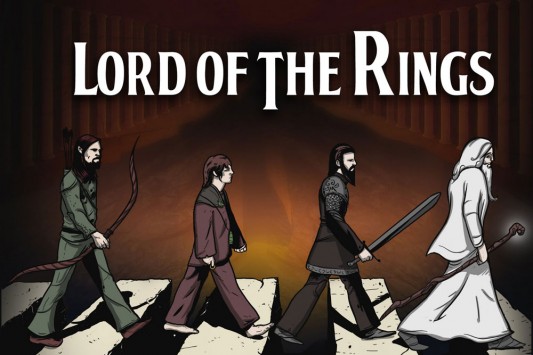
A great week in fantasy literature, with an impending update from GRRM on A Dance with Dragons, Amazon emailing clients who have previously purchased Scott Lynch works (me) announcing the launch date of The Republic of Thieves, reviews of The Heroes and Shadowheart, interviews with Ursula K. Le Guin and Tracy Hickman, and it seems LOTR has gone Beatles. Whew!

Come to Mordor music video

Categories: Fantasy Blogosphere, News | Tags: , , , , , , , , , , , , , , , , | 1 Comment

Amazon’s Top 5 Fantasy Books, January 9, 2011

Its an epic/urban slugfest to kick off 2011, with two novels each by H.P. Mallory and George R.R. Martin making the top 5. In a hilarious contrast, we have novels from one of the best epic fantasy series in recent history sharing the top 5 with what has to be one of the cheesiest urban fantasy series ever, stealing its titles from Shakespeare. I’m really not sure which takes the cake: a novel titled “Fire Burn and Cauldron Bubble, A Paranormal Romance”, or “Abraham Lincoln: Vampire Hunter”, which we saw in the top 5 in 2010. Ricidulous. Anyway, definitely worth noting is the fact that all 5 novels in the top 5 this week are Kindle editions. Will we say goodbye brick and mortar stores in 2011?

  1. Fire Burn and Cauldron Bubble, a Paranormal Romance (Kindle) by H.P. Mallory
  2. A Game of Thrones (Kindle) by George R.R. Martin
  3. Toil and Trouble, a Paranormal Romance (Kindle) by H.P. Mallory
  4. Out of the Black (Kindle) by Lee Doty
  5. A Clash of Kings (Kindle) by George R.R. Martin
Categories: Bestsellers, News | Tags: , , , , , , , , | 2 Comments

Top 10 Fantasy Book Trends of 2010

I’ve been tracking the top 5 books in the fantasy category on Amazon’s bestseller list for a while now, and I figured I could pull some interesting data from the weekly posts.

This is the second in a series of Top 10 posts covering the fantasy industry. Last week, we covered the Top 10 Fantasy Books of 2010. Next week, we cover the Top 10 Fantasy Books for 2011.

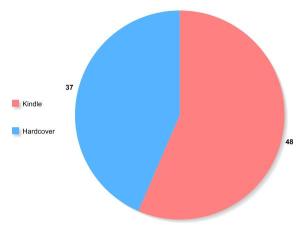
Kindle vs. Hardcover

I’ve only been tracking formats since September, but this is still 33% of the year’s worth of data. Starting on September 5, 2010, and reviewing the data weekly, 48 times Kindle editions of books were in the top 5, and only 37 times hardcover editions of books made the top 5. One interesting note here: Kindle sales were stronger in September and October, then as Thanksgiving rolled around, hardcover sales surged. But, once we got to the final week of the year, the day after Christmas marked the first week where all five novels in the top 5 list were Kindle editions. An inkling of what’s to come in the new year?

Epic Fantasy vs. Urban Fantasy

In the epic vs. urban smack-down urban fantasy wins, hands down. Urban fantasy novels appeared in the top 5 a whopping 198 times, to only 43 for epic fantasy. Epic fantasy was helped tremendously by the Jordan/Sanderson novels, but it just wasn’t enough to come close. Even though we see a traditional spike of epic fantasy sales around Christmas every year, urban fantasy is riding strong from 2010 into 2011.

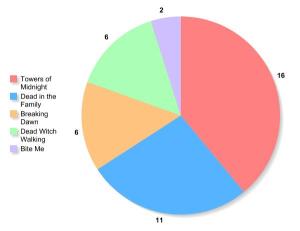
Most Weeks at #1

Towers of Midnight spent the most weeks in the #1 spot, with 16. Second was Dead in the Family, with 11 weeks. Tied for third were Breaking Dawn by Stephanie Meyer, and Dead Witch Walking, by Kim Harrison. Rounding out the top 5 novels in #1 for the most weeks was Bite Me, with two weeks in first place. The following novels all grabbed first place for one week only: A Game of Thrones, No Mercy, The Legend of Sigurd & Godrum, Calling Home, Changes, Once Bitten, Wit’ch Fire and Eclipse.

Longest Streak at #1

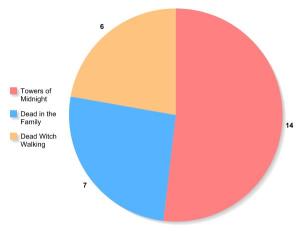
Towers of Midnight spent 14 weeks at #1, from September 5 through December 19, showing that even with the influx of urban and vampire fantasy, traditional epic fantasy still holds a place in fans’ hearts. Second was Dead in the Family by Charlaine Harris with 7 weeks at #1, and third was Dead Witch Walking by Kim Harrison with 6 weeks at #1.

Longest Streak in Top 5 (any position)

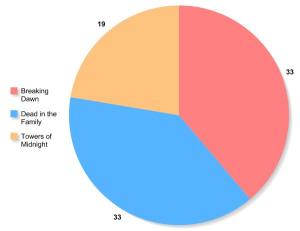
Amazingly, both Dead in the Family and Breaking Dawn tied, for spending 33 consecutive weeks in the top 5 each. In second place for this category is Towers of Midnight, which spent 19 consecutive weeks in the top 5 list.

Categories: Top 10, Trends | Tags: , , , , , , , , , | 7 Comments

Review: The Way of Kings by Brandon Sanderson

Book review of Brandon Sanderson’s The Way of Kings

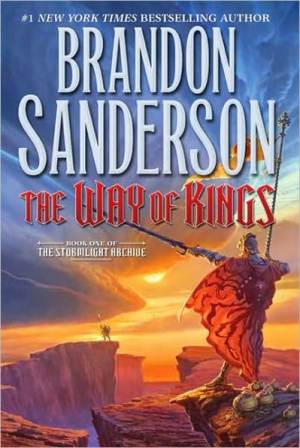
fantasy books Brandon Sanderson's The Way of KingsThe Way of Kings was probably one of the most highly anticipated fantasy novels of 2010, with the popularity of The Wheel of Time series and Sanderson being selected as the author to complete the series after Jordan’s passing. The Way of Kings is the first novel in an extremely ambitious new ten novel series, titled The Stormlight Archive. This series is undoubtedly Sanderson’s offering to fantasy fans that will make an attempt to reside upon the shelf next to other such large fantasy series, ala The Wheel of Time, The Malazan Book of the Fallen, and A Song of Ice and Fire. How does this first novel fare as a stand alone novel, and how does it stack up against other first novels in similar series? Let’s dig in.
First and foremost, The Way of Kings brings classic Sanderson to the table. The heroes and villians are fairly apparent, like previous Sanderson novels, not the truly multi-faceted characters we see in A Game of Thrones, for example. This really isn’t a problem for me, and I think its really a matter of reader preference. I personally enjoy having a character that holds hope and good intention above all else, and will make huge sacrifices in order to uphold these beliefs. I think its noble, and a fairly essential element to any fantasy novel. The Way of Kings focuses on three main characters, very similar to Elantris, and chapters rotate between their view points. There are also intermissions where Sanderson gives us glimpses of other aspects of the world he’s created, and these were some of the most enjoyable scenes for me in this novel.

The world building in The Way of Kings is fantastic. This is a believable world with believable characters. Humans who fight for personal gain. A vast plateau terrain, dubbed The Shattered Plains, where military action takes place on a grand scale. Troops move like chess pieces using permanent and temporary bridges to span the area between the plateaus, in search of gemstones which power the suits of armor and other magical items used in battle.

The magic system in The Way of Kings is on par with previous Sanderson novels, which is to say, head and shoulders above magic systems in modern fantasy fiction. The magic systems Sanderson has created in Elantris, Mistborn, and now The Way of Kings are not only unique and inventive, they are all believable in that they all have some grounding in science or nature. The Way of Kings offers a magnificent system, in which small stone-like spheres are the form of currency, but they have to be infused with storm light by leaving them out in a storm, lest they become dun. The energy from these spheres is what is used by talented knights to fuel their special powers, which include heightened strength, endurance, and the ability to “lash” themselves or objects in different directions than gravity normally dictates. This same storm light is what fuels the coveted swords and armor in The Way of Kings, which Sanderson has dubbed shard blades and shard plate, respectively.

In The Way of Kings, we see Sanderson maturing as an author, as he brings in more subject matter for the reader to ponder than his typical themes of hope and belief. While his theme of hope is present and strong as ever:

“Somebody has to start. Somebody has to step forward and do what is right, because it is right. If nobody starts, then others cannot follow.”

He also touches upon other topics, such as maturity:

“A man’s emotions are what define him, and control is the hallmark of true strength. To lack feeling is to be dead, but to act on every feeling is to be a child.”

authority,:

“Authority doesn’t come from a rank,” Kaladin said, fingering the spheres in his pocket.

“Where does it come from?”

“From the men who give it to you. That’s the only way to get it.”

and he even manages to mix in a little comedy:

“All right. First, find a cliff.”

“That, it will give you a vantage to see the area?”

“No”, Kaladin said. “It will give me something to throw you off of.”

The one blaring issue with The Way of Kings is the pace of the novel. The Way of Kings reads like the first novel in a ten book series, not like a quality stand alone novel that should serve as the flare to ignite reader’s passion to swallow a ten book series. It really is unfortunate, as this is a very well written novel, and everything else is extremely well done, all the way down to the quality of the hardbound edition with a Whelan cover and numerous interior illustrations. The Way of Kings just doesn’t have to be as big as it is, and that’s one of Strunk & White’s cardinal rules for writing: omit unnecessary words. I do enjoy character background detail, and also building believable scenarios, but The Way of Kings goes a few steps too far. I really enjoyed the bridge runs, but we could have cut back on a few, and the plot line with Shallan was good, but maybe just a little too extended for the eventual punchline.

Despite the pacing issues, The Way of Kings is a good first effort in a new epic fantasy series. How does it stack up against similar competition? I’d recommend the first novels in A Song of Ice and Fire and The Wheel of Time before The Way of Kings to people new to the fantasy genre, but would strongly recommend The Way of Kings to Sanderson fans. I am a huge Sanderson fan, and I think his previous work in Elantris and the Mistborn series is top-notch, so I’ll look to the next novel in this series to resolve the pacing issues, as everything else is there for this to be a home run fantasy series.

You can purchase The Way of Kings over at Amazon.com.

Fantasy Book News Ratings

  • Overall: 6 out of 10
  • Plot Originality
  • Setting Development
  • Characterization
  • Dialog
  • Pace

Fan Ratings

Categories: Brandon Sanderson, Reviews, The Stormlight Archive | Tags: , , , , | 2 Comments

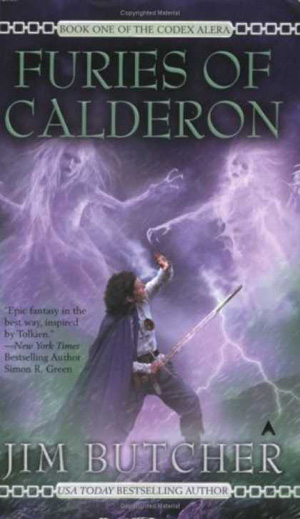
Review: Furies of Calderon by Jim Butcher

Book review of Jim Butcher’s Furies of Calderon

fantasy books Jim Butcher's Furies of CalderonJim Butcher is one of the hottest names in urban fantasy right now, but how does his writing style translate into the epic fantasy genre? This was the main question I wanted to answer when approaching Furies of Calderon. I’ve only read the first novel in Butcher’s Dresden Files series, Storm Front, and enjoyed it thoroughly, but I wondered how Butcher’s knack for writing fast-paced mystery in an urban setting would transfer to a classic epic fantasy.

The characters in Furies of Calderon are good, if not as memorable as Harry Dresden and crew. We have Tavi, a boy who is handicapped by not having matured into his fury – what Butcher describes as magic – when everyone else his age has already gained their fury. We are introduced to a fairly standard cast of characters: Tavi’s uncle and aunt, keepers of Bernardholt, Amara, a girl in the king’s employ, and a great villain in Fidelias. Butcher has created a great people in the Marat – savages that have trained ostrich-like birds to do their bidding, and we even get to see some flying knights in Furies of Calderon.

Magic in Furies of Calderon is something that everyone just has by their nature of being human. Each individual has a connection with some element of nature: some draw from the air and storms, others from the earth, and others still from water. It was interesting to read Furies of Calderon and immediately follow up by reading Sanderson’s The Way of Kings; these are two novels that contain storms that are more harsh than normal, and both have a connection to the magic system, Sanderson’s albeit a bit more inventive.

Furies of Calderon moves along at a good pace; I did not once feel like the novel was dragging. There are plenty of action sequences, and the plot moves along like a good epic fantasy should: characters identify problems, embark on adventures to resolve said problems, and team up with other forces to accomplish goals that might not have been possible to accomplish alone. It seems that Butcher’s craft that has been honed writing urban mystery novels has translated well, at least in format, to the epic fantasy genre.

Furies of Calderon is a good stand-alone novel. The main character Tavi starts out with many doubts, and by the end of the novel he has a real sense of accomplishment. In this, Furies of Calderon works well as a self-contained novel, but does leave the door open for future tales, as he has already demonstrated by publishing five subsequent volumes in the series.

For me, Furies of Calderon just didn’t pack that extra punch that pushes some fantasy novels into that upper tier. Being Butcher’s first time out in the epic fantasy genre, this may have been the intent: get a good, solid first novel out there to serve as the foundation for future volumes where he’ll be able to take more risks and be a bit more inventive in the epic fantasy genre. I’ll be interested in seeing where he takes the series next, and if he ups the ante with the following books in the Codex Alera series.

You can purchase Furies of Calderon over at Amazon.com.

Fantasy Book News Ratings

  • Overall: 6 out of 10
  • Plot Originality
  • Setting Development
  • Characterization
  • Dialog
  • Pace

Fan Ratings

Categories: Jim Butcher, Reviews, The Codex Alera | Tags: , , , , | 1 Comment